
Patellar Tendinitis

Patellar Tendinopathy / Jumper’s Knee
TENEX | MINIMALLY INVASIVE TENDON CARE
Table of Contents
Understanding the Condition
Patellar tendinopathy, often called jumper’s knee, causes pain at the front of the knee, usually just below the kneecap where the patellar tendon attaches. It is common in basketball, volleyball, running, and activities involving repeated jumping, landing, or squatting.
Acute Injury vs. Chronic Tendon Pain
Early symptoms may follow a sudden training increase. Persistent overload can produce chronic tendon changes, making pain recur with activity even after periods of rest. Chronic tendinopathy is often a problem of reduced tendon load tolerance, not simply inflammation.
In the early phase, the goal is to manage the load and allow recovery. When pain persists for months, the problem may involve tendon degeneration, disorganized collagen, and impaired remodeling rather than ongoing acute inflammation. Repeated overload, delayed rehabilitation, or an incomplete diagnosis can contribute to a cycle of persistent symptoms. Not every chronic tendon disorder is caused by inadequate treatment, and imaging findings must be interpreted alongside the clinical examination.
Treatment Options: From Rehabilitation to Targeted Procedures
A progressive loading program is the cornerstone of treatment, often using isometric, heavy-slow resistance, and sport-specific exercises. Training volume, jumping mechanics, hip strength, and recovery time are addressed. Other interventions may be considered when progress stalls.
Most patients improve without a procedure. When pain continues despite an appropriate course of conservative treatment, reassessment can help determine whether there is a localized tissue abnormality that might respond to a more targeted intervention.
Tenex: A Minimally Invasive Option
For persistent focal patellar tendinopathy with ultrasound-confirmed abnormal tissue and failure of a comprehensive rehabilitation plan, Tenex may be considered. Through a small incision, an ultrasound-guided ultrasonic tip removes targeted degenerative tissue while avoiding healthy structures. Recovery requires a graduated return to loading rather than immediate high-impact sport.
The procedure is typically performed with local anesthetic and real-time ultrasound guidance through a very small incision. The ultrasonic tip fragments targeted abnormal tissue while irrigation and suction remove debris. Patients receive a personalized activity and rehabilitation plan afterward. Recovery timelines vary by site and severity, and improvement is not guaranteed. Potential risks include infection, bleeding, nerve or tissue injury, persistent pain, and tendon weakening or rupture.
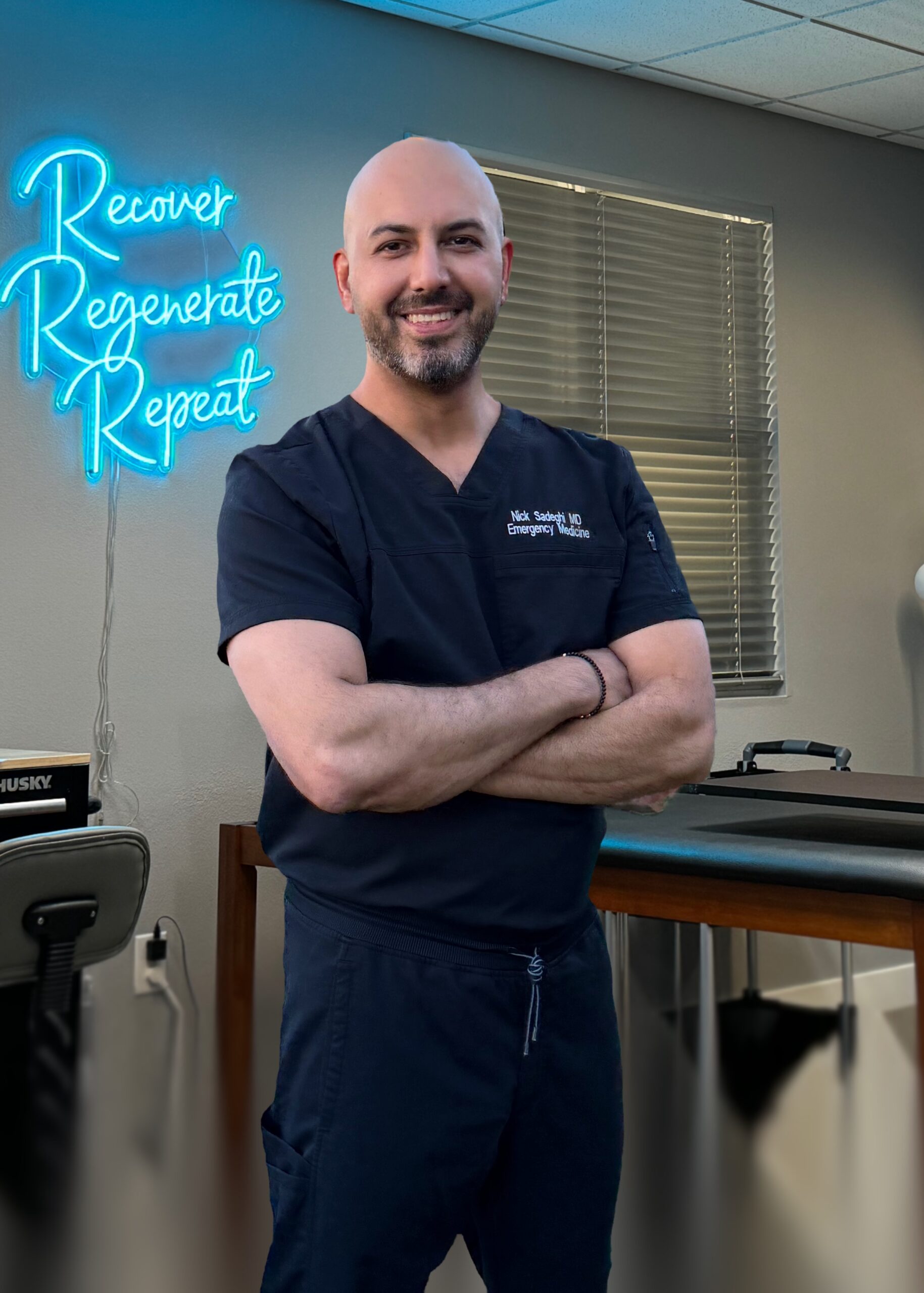
Meet Dr. Nick Sadeghi
“The mission of Synaptic is to help people stay strong, active, healthy, and engaged throughout every stage of life by combining longevity medicine, regenerative therapies, recovery science, and athlete-focused care into one integrated system.”
Whether the goal is optimizing athletic performance, improving recovery, restoring energy, or supporting healthy aging, Synaptic focuses on helping the body function at a higher level for longer. Using modern therapies such as Hormone Replacement Therapy, NAD optimization, Regenerative medicine, Chiropractic body work, PRP, Tenex, EBOO, and advanced recovery modalities, Synaptic is designed to support performance, resilience, recovery, and long-term vitality.
Dr. Nick Sadeghi
The Synaptic Way: Integrated Recovery
At Synaptic, we look beyond the tendon to jumping mechanics, quadriceps and hip strength, training demands, and recovery. When Tenex is appropriate, we integrate it with structured rehabilitation and selected complementary modalities, potentially including shockwave, laser, or PEMF, while monitoring progress and avoiding premature return to sport.
Our approach brings sports medicine, regenerative and rehabilitation principles, and recovery technology together—selecting the right intervention for the right stage of healing.