
Chelation Therapy
Targeting Heavy Metals Through an Integrated Approach to Cellular Health
Every day, our bodies encounter metals through the air we breathe, the water we drink, the food we eat, and the environments in which we live and work.
Some metals are essential to life, while others can accumulate in the body and interfere with normal cellular function.
At Synaptic Sports & Longevity, we recognize that environmental exposures may influence long-term health. EDTA chelation therapy is one approach used in medicine to bind certain metals and support their elimination from the body.
Table of Contents
What Is EDTA Chelation?
EDTA stands for ethylenediaminetetraacetic acid. It is a compound that binds to certain metal ions through a chemical process called chelation. When EDTA attaches to a metal, it forms a complex that may be eliminated through the kidneys and urine.
EDTA has been used in medicine for decades, particularly in the treatment of lead poisoning. Researchers continue to investigate its potential applications in other areas of health.
Why Is Chelation Important?
Heavy metals can interfere with important biological functions, including enzyme activity, mitochondrial metabolism, nerve function, and the body’s natural antioxidant defenses. Certain metals can contribute to oxidative stress, a process in which reactive molecules overwhelm the body’s ability to maintain normal cellular balance.
Chelation is designed to reduce the burden of susceptible metals, potentially limiting their continued interaction with tissues.
Potential Benefits Being Investigated
- Heavy Metal Reduction
- Cellular Protection: Potentially reducing metal-related oxidative stress and cellular injury.
- Mitochondrial Health: Investigating whether reducing toxic metal exposure may help preserve normal energy metabolism.
- Cardiovascular Health: Studying the relationship between toxic metals, vascular health, and cardiovascular outcomes.
- Neurological Health: Exploring the effects of reducing harmful metal exposure on nervous system function.
- Kidney and Liver Health: Understanding how reducing toxic exposures may influence organ health.
- Inflammatory Balance: Investigating the relationship between environmental metals and inflammatory signaling.
- Long-Term Health: Studying the potential role of reducing toxic metal burden in healthy aging.
These areas reflect biological mechanisms and ongoing research rather than established benefits of EDTA therapy for every condition.
What Metals Can EDTA Chelate?
EDTA can chemically bind a variety of metal ions. The strength of that interaction varies depending on the metal, EDTA formulation, and surrounding conditions.
| Metal | Potential EDTA Interaction |
|---|---|
| Lead | Strong binding; calcium disodium EDTA is used medically for selected cases of lead poisoning |
| Cadmium | Can form EDTA complexes |
| Mercury | Can form complexes with certain mercury ions |
| Arsenic | Some chemical interactions are possible |
| Aluminum | Can form EDTA complexes under appropriate chemical conditions |
| Nickel | Can bind EDTA through metal-ion complex formation |
| Chromium | Can form complexes with certain chromium species |
| Copper | Strong EDTA binding; copper is also an essential mineral |
| Zinc | Can bind EDTA; zinc is essential for immune and enzyme function |
| Iron | Can form EDTA complexes; iron is essential for oxygen transport |
| Manganese | Can bind EDTA; manganese is an essential trace mineral |
| Cobalt | Can form EDTA complexes under appropriate conditions |
| Calcium and Magnesium | Can bind EDTA and are important to normal muscle, nerve, and cardiovascular function |
Who May Be Exposed to Heavy Metals?
Environmental metal exposure is increasingly relevant in discussions of preventive medicine and long-term health.
- Industrial pollution and occupational exposure.
- Older plumbing systems and contaminated drinking water.
- Lead-based paint and contaminated household dust.
- Soil contamination near industrial or mining sites.
- Certain seafood and other foods containing environmental contaminants.
- Some imported products, cosmetics, and traditional remedies.
- Manufacturing, welding, metalworking, and other occupational activities.
Environmental regulations have reduced many exposures, but toxic metals remain an important public health concern. At Synaptic, understanding an individual’s exposure history is part of determining whether further evaluation is appropriate.
When and How Is EDTA Administered?
Treatment generally involves intravenous administration of a specific EDTA formulation. An IV catheter is placed into a vein, allowing the prescribed solution to enter the bloodstream under medical supervision.
The infusion rate and duration depend on the formulation, indication, dose, and patient-specific factors. EDTA should not be administered as an unrestricted rapid IV push because serious complications can occur.
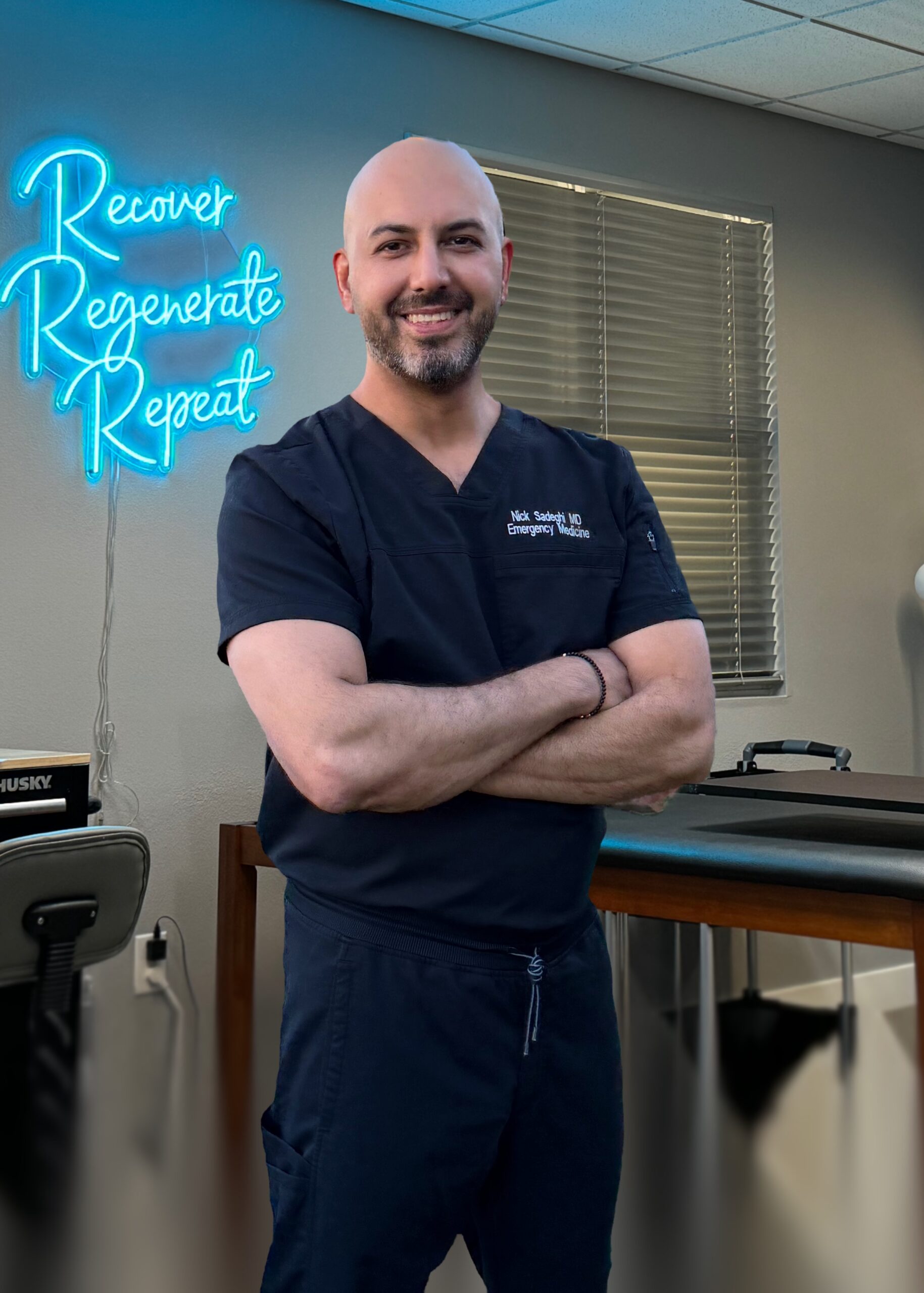
Meet Dr. Nick Sadeghi
“The mission of Synaptic is to help people stay strong, active, healthy, and engaged throughout every stage of life by combining longevity medicine, regenerative therapies, recovery science, and athlete-focused care into one integrated system.”
Whether the goal is optimizing athletic performance, improving recovery, restoring energy, or supporting healthy aging, Synaptic focuses on helping the body function at a higher level for longer. Using modern therapies such as Hormone Replacement Therapy, NAD optimization, Regenerative medicine, Chiropractic body work, PRP, Tenex, EBOO, and advanced recovery modalities, Synaptic is designed to support performance, resilience, recovery, and long-term vitality.
Dr. Nick Sadeghi
EDTA Chelation and EBOO: A Coordinated Approach
At Synaptic, we are interested in how different medical technologies may complement one another. EDTA chelation and EBOO approach blood treatment through different mechanisms.
EDTA works chemically by binding susceptible metal ions. EBOO—Extracorporeal Blood Oxygenation and Ozonation—uses continuous blood circulation through a system that integrates membrane filtration and oxygen-ozone exposure.
How Could They Complement Each Other?
A coordinated approach could potentially involve two distinct processes:
- Chemical Binding Through EDTA — EDTA binds certain metal ions, forming complexes that may be eliminated through the kidneys.
- Extracorporeal Membrane Interaction Through EBOO — The EBOO membrane may interact with certain substances through filtration or adsorption, depending on their molecular characteristics and the design of the system.
The Synaptic Way: The Power of Integration
The Synaptic Way focuses on synergy—bringing complementary approaches together with the goal of supporting cellular health and overall wellness.
EDTA chelation and EBOO illustrate this philosophy. EDTA provides a chemical approach to binding susceptible metals, while EBOO incorporates extracorporeal circulation, membrane filtration, and oxygen-ozone treatment.
At Synaptic, we begin with individualized medical assessment, environmental exposure history, and appropriate testing to determine which treatments may be suitable. Our goal is to understand these relationships and explore how complementary treatments may be integrated thoughtfully into a personalized approach to health and longevity.
Discover the Synaptic Approach
Heavy metal exposure is one of many environmental factors that can influence human health.
At Synaptic Sports & Longevity, we combine medical evaluation with an interest in emerging technologies and the evolving science of cellular health.
Explore EDTA chelation, EBOO, and our integrated approach to longevity medicine.