
Regenerative Biologics
Exploring the Science of Tissue Repair and Cellular Communication
Regenerative medicine is an evolving field focused on understanding how the body repairs damaged tissue and responds to injury. One area of scientific interest involves biologic materials derived from donated human tissue, including the umbilical cord. At Synaptic Sports & Longevity, we believe patients deserve a clear understanding of the science behind regenerative biologics, the importance of responsible tissue sourcing, and the difference between promising laboratory research and treatments proven to work in humans.
Table of Contents
What Are Regenerative Biologics?
Regenerative biologics are materials derived from biological sources that are studied for their potential roles in tissue support, cellular communication, and repair. One material receiving considerable scientific attention is Wharton’s jelly, a soft, gel-like connective tissue found within the human umbilical cord. Wharton’s jelly contains a natural framework called the extracellular matrix, which includes structural proteins, sugars, and other components that help support the surrounding tissue. Researchers are interested in this matrix because it can contain biological signaling molecules and growth factors associated with cellular activity and tissue development.
The Science: More Than Stem Cells
Stem cells have attracted considerable attention in regenerative medicine because certain types can develop into specialized cells and participate in tissue maintenance and repair. However, the science of regenerative medicine extends beyond stem cells themselves. Researchers are also studying cellular signaling—the way cells communicate through growth factors, proteins, and other biological molecules. The extracellular matrix of umbilical cord tissue is particularly interesting because it provides both structural support and an environment in which signaling molecules may be stored or interact with cells.
- Communication between cells
- The body’s response to inflammation
- Tissue organization and repair processes
- The environment surrounding injured cells
- Normal tissue maintenance
This research helps explain why regenerative medicine is increasingly focused on the interaction between cells, signaling molecules, and their surrounding tissue. Laboratory findings should not be confused with clinical results: the presence of signaling molecules does not establish that an injected, processed product will repair damaged joints, tendons, or ligaments.
Where Do Regenerative Biologics Come From?
Responsible sourcing is an essential part of biologic medicine. Wharton’s jelly is obtained from donated umbilical cord tissue following childbirth, with appropriate informed consent and donor eligibility screening. A properly managed donation and processing program includes:
- Donor Screening: Medical history review and appropriate infectious disease testing to reduce infection risk.
- Tissue Collection: Collection following delivery through established donation procedures.
- Laboratory Processing: Transport to a specialized tissue-processing facility for handling and preparation according to applicable requirements.
- Quality and Safety Testing: Product-dependent checks for contamination, identity, and other quality measures.
- Documentation and Traceability: Records allowing tissue to be traced through collection, processing, and distribution.
At Synaptic, our standard for evaluating biologic materials is to consider laboratories operating under applicable FDA requirements, with documented donor screening, quality controls, and product traceability.
Why Are Regenerative Biologics Being Studied?
Researchers are investigating whether biologic materials and their components could eventually provide new ways to influence tissue repair and recovery. Potential areas include joint health, tendon injuries, cartilage biology, inflammation, and cellular signaling. Much of this research remains early-stage. Wharton’s jelly-derived products are not FDA-approved to treat orthopedic injuries, arthritis, or chronic musculoskeletal pain.
When and Who Might Benefit?
Potential clinical applications of umbilical cord-derived biologics remain under investigation. For patients interested in emerging regenerative technologies, the first step is understanding their diagnosis, the available evidence, and which treatments have demonstrated clinical benefit.
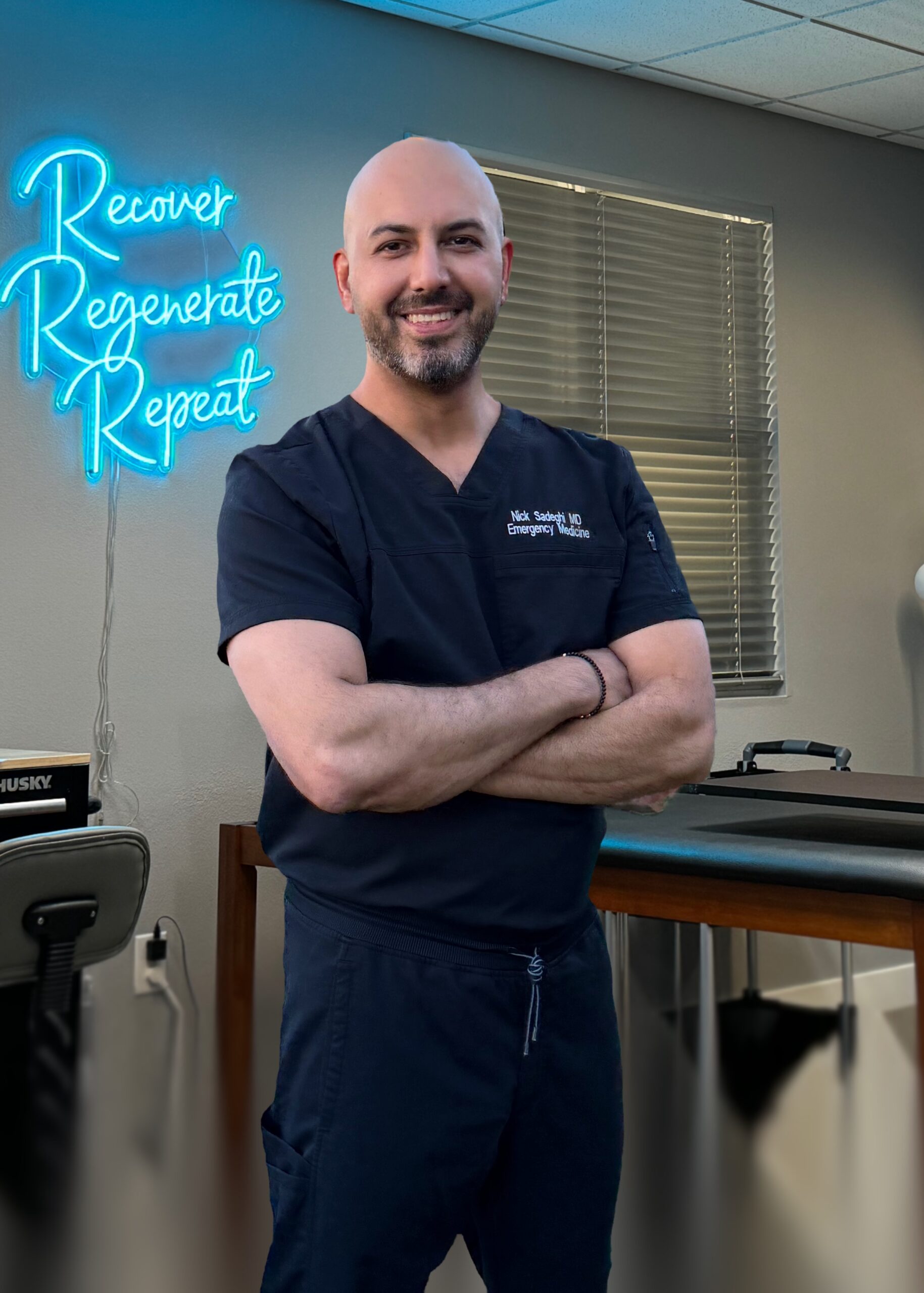
Meet Dr. Nick Sadeghi
“The mission of Synaptic is to help people stay strong, active, healthy, and engaged throughout every stage of life by combining longevity medicine, regenerative therapies, recovery science, and athlete-focused care into one integrated system.”
Whether the goal is optimizing athletic performance, improving recovery, restoring energy, or supporting healthy aging, Synaptic focuses on helping the body function at a higher level for longer. Using modern therapies such as Hormone Replacement Therapy, NAD optimization, Regenerative medicine, Chiropractic body work, PRP, Tenex, EBOO, and advanced recovery modalities, Synaptic is designed to support performance, resilience, recovery, and long-term vitality.
Dr. Nick Sadeghi
The Synaptic Way: Science, Synergy, and Responsible Innovation
At Synaptic, our philosophy is based on the understanding that healing and recovery involve multiple biological processes working together. Cells, signaling molecules, blood supply, mechanical forces, and the surrounding tissue environment all play important roles in how the body responds to injury. The Synaptic Way brings this understanding into an individualized approach to sports and regenerative medicine. Rather than relying on a single procedure, we evaluate how evidence-supported treatments may complement one another.
- Shockwave Therapy: Targeted acoustic energy used in selected tendon and soft tissue conditions.
- Platelet-Rich Plasma (PRP): A treatment using concentrated platelets from the patient’s own blood for certain musculoskeletal conditions.
- Laser and Other Recovery Technologies: Supportive options considered according to individual needs and available evidence.
- Chiropractic Care and Rehabilitation: Improving movement, strength, and physical factors contributing to injury.
Our interest in regenerative biologics reflects a commitment to understanding emerging science while maintaining responsible clinical standards. The goal is to combine appropriate medical care with a comprehensive recovery strategy—not to promise results that have yet to be demonstrated.
Learn More About Regenerative Medicine
At Synaptic Sports & Longevity, we believe innovation should be guided by science, safety, and individualized patient care. Schedule a consultation to discuss your injury, established regenerative treatment options, and the latest developments in biologic research.