
Sports & Regenerative Medicine
What is Sports Medicine?
A physician who practices sports medicine cares for patients who have sustained injuries related to athletic activity. This includes professional and amateur athletes, as well as active individuals who regularly participate in exercise and physical activity. Despite the name, sports medicine also focuses on caring for patients who develop injuries during everyday life, including overuse injuries, work-related injuries, and injuries that occur outside of organized sports. Patients seeking sports medicine in Las Vegas often turn to Synaptic for comprehensive care that supports injury recovery, mobility, and long-term physical performance.
At Synaptic, sports medicine extends beyond simply treating injuries after they occur. Our philosophy is centered around optimizing how the body recovers, adapts, and performs over time. This is where sports medicine, regenerative medicine, and longevity medicine begin to overlap.
The same principles that help an athlete recover from injury—supporting tissue repair, improving cellular recovery, optimizing movement, and reducing chronic degeneration—are also central principles in longevity-focused medicine.
Table of Contents
Key Areas Treated
- Musculoskeletal injuries in athletes.
- Overuse injuries.
- Job-related injuries.
- Life-related injuries.
- Sports-related injuries.
In summary, a sports medicine doctor specializes in treating patients with all types of musculoskeletal injuries.
Is Sports Medicine Just For Athletes?
No. Sports medicine covers a wide variety of musculoskeletal injuries. While it includes professional and amateur athletes, it also includes regular people who experience injuries during everyday activities. Sports medicine physicians care for patients across all age groups and work with a broad range of activity-related and overuse conditions.
What Types of Treatments We Use?
- Physical therapy
- Chiropractic treatment
- Trigger point injections
- Steroid injections
- Regenerative medicine–based therapies
- Hyperbaric Oxygen
- Full spectrum light
- PEMF
- NAD and Peptide Therapy

The Synaptic Philosophy
At Synaptic, we believe the body functions through interconnected systems rather than isolated parts. Muscles, joints, nerves, circulation, cellular metabolism, and recovery pathways all work together through communication networks within the body—the “synapse.”
Because of this, we believe the best outcomes occur through synergy: the strategic combination of multiple treatment modalities working together toward a common goal. Our approach combines traditional sports medicine with advanced regenerative therapies to create personalized treatment plans for patients throughout the Las Vegas area.
A single therapy rarely addresses every component of an injury or recovery process. Structural treatments may improve biomechanics. Regenerative therapies may support tissue repair. Recovery devices may improve oxygen delivery, circulation, and cellular energy production. When these therapies are layered together appropriately, the overall effect becomes more powerful and comprehensive.
In my experience, many injuries do not fully improve without some form of active treatment or intervention. A well-rounded sports medicine physician should understand how to integrate multiple treatment methods in a coordinated way to support the body’s recovery processes. At Synaptic, this includes combining physical medicine, regenerative therapies, recovery technologies, peptide-based protocols, and performance-focused strategies into a personalized treatment system based on the individual needs of each patient.
This philosophy extends beyond simply treating pain or injury. Our goal is to improve recovery capacity, maintain long-term function, and support overall performance and resilience over time. The same principles that help athletes recover from injury—supporting tissue repair, optimizing recovery, improving cellular function, and maintaining mobility—are also central principles within longevity medicine.
The link between sports medicine and longevity is Regenerative Medicine.
Regenerative Medicine
Regenerative medicine represents one of the most important links between sports medicine and longevity medicine. As a provider of regenerative medicine in Las Vegas, Synaptic incorporates these therapies into comprehensive treatment plans designed to support healing, recovery, and long-term function.
In sports medicine, regenerative therapies are used to support the body’s natural repair processes following injury, overuse, or chronic degeneration. In longevity medicine, many of these same therapies are used to support tissue integrity, mobility, recovery, and physical performance as the body ages.
Rather than viewing recovery and aging as separate concepts, we view them as connected processes that both rely on the body’s ability to repair, adapt, and regenerate. This is why regenerative medicine plays such a central role within the Synaptic philosophy.
Key treatments in Regenerative Medicine
- PRP (platelet-rich plasma)
- Regenerative biologics
- Red light therapy
- Hyperbaric oxygen therapy
These therapies are often integrated together with physical medicine, recovery protocols, and advanced recovery technologies to create a more complete and personalized treatment strategy.
As a premier anti-aging clinic in Las Vegas, Synaptic combines personalized treatment plans with advanced therapies designed to support healthy aging and long-term vitality.
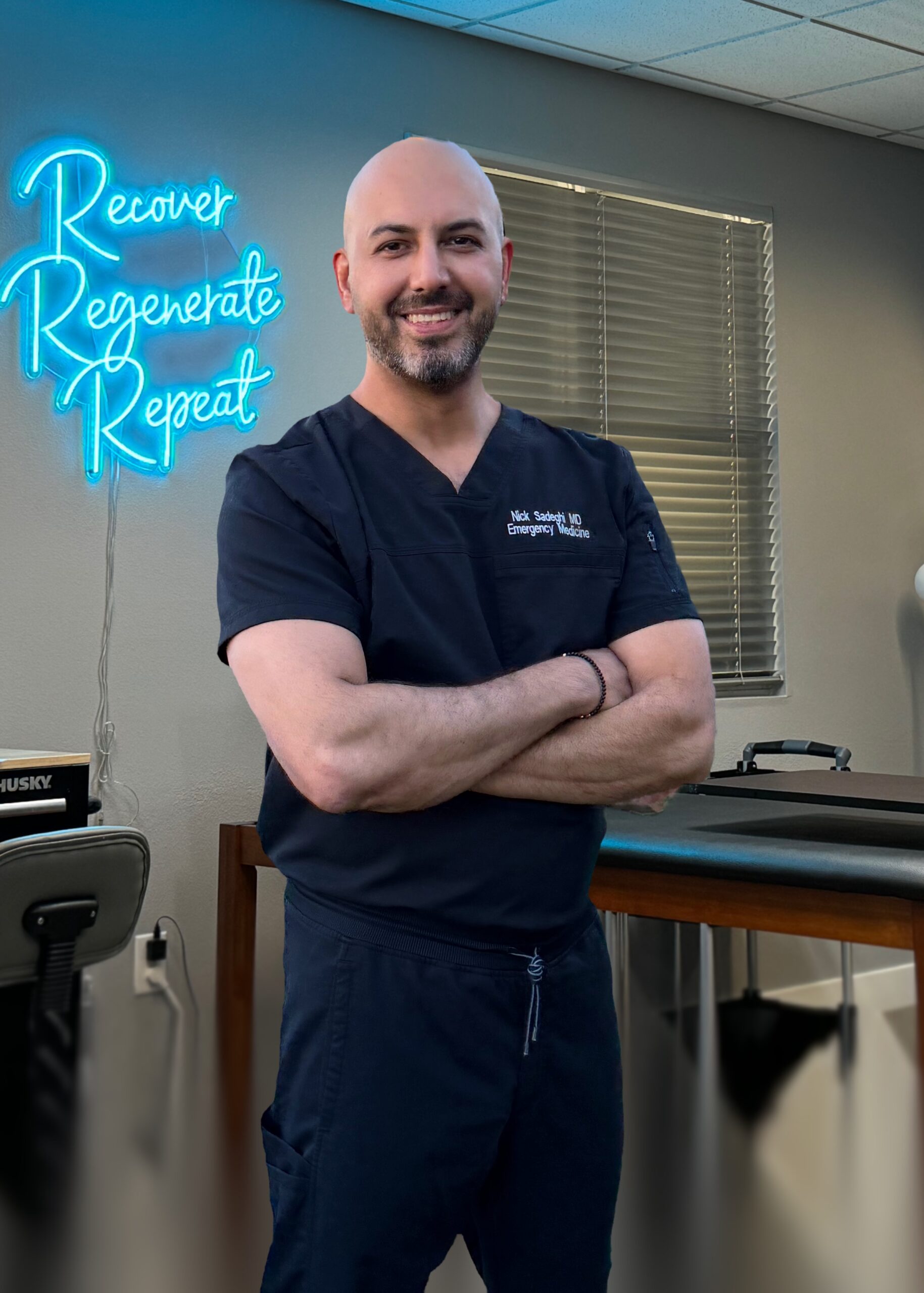
Meet Dr. Nick Sadeghi
“The mission of Synaptic is to help people stay strong, active, healthy, and engaged throughout every stage of life by combining longevity medicine, regenerative therapies, recovery science, and athlete-focused care into one integrated system.”
Whether the goal is optimizing athletic performance, improving recovery, restoring energy, or supporting healthy aging, Synaptic focuses on helping the body function at a higher level for longer. Using modern therapies such as Hormone Replacement Therapy, NAD optimization, Regenerative medicine, Chiropractic body work, PRP, Tenex, EBOO, and advanced recovery modalities, Synaptic is designed to support performance, resilience, recovery, and long-term vitality.
Dr. Nick Sadeghi
What is PRP and how does It work?
PRP stands for platelet-rich plasma. Platelets are cells in your blood that play a key role in the body’s natural response to injury. They help form clots and release growth factors that attract healing cells and reparative structures, supporting tissue healing in the affected area.
How PRP is Administered:
- Blood Draw: A small amount of blood is drawn from your arm.
- Processing: The platelets are separated from the rest of the blood.
- Injection: The concentrated platelets are injected into the targeted area.
Once injected, the platelets promote the body’s natural repair response in the treated area. At Synaptic, PRP is often incorporated into a broader recovery strategy that may also include rehabilitation, regenerative therapies, peptide support, and recovery devices to create a more synergistic treatment approach.
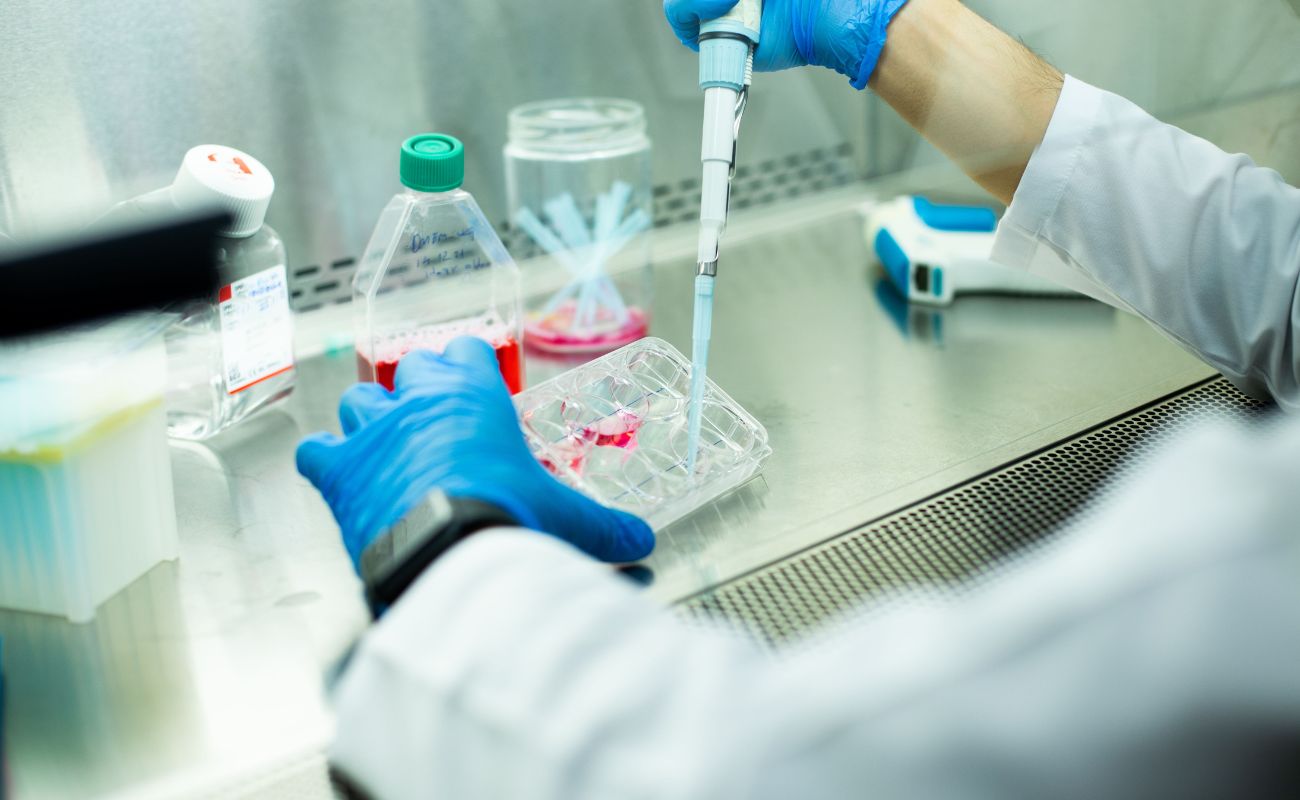
How do Stem Cells work and where do they come from?
Stem cells are specialized cells naturally found in the body that play an important role in normal tissue maintenance and repair. One of their defining characteristics is the ability to develop into different tissue types—such as muscle, bone, or cartilage—as part of the body’s natural healing processes. When tissue is injured, the body initiates a complex repair response involving inflammatory signaling, growth factor release, and the recruitment of endogenous stem and progenitor cells. These processes help support tissue repair, regulate inflammation, and restore normal function as part of the body’s innate healing system.
In the context of sports medicine and regenerative medicine, care is focused on supporting the body’s natural repair environment, particularly in conditions involving joints, tendons, ligaments, and other musculoskeletal tissues. Rather than replacing or manipulating stem cells directly, regenerative biologics are designed to work alongside the body’s existing biological processes to support recovery and function over time.
Stem cells naturally reside in several areas of the body, including bone marrow and adipose (fat) tissue, where they contribute to ongoing tissue maintenance and repair. Regenerative biologics may be sourced from these tissues or from carefully screened donor-derived birth tissues.
By delivering regenerative biologic therapies to targeted areas, we aim to support the body’s intrinsic repair mechanisms, offering options that can be part of a comprehensive, non-surgical care strategy.
At Synaptic, regenerative biologic therapies are rarely viewed as isolated procedures. Instead, they are often integrated alongside rehabilitation programs, recovery devices, peptide therapy, and performance-focused treatment strategies to support a more complete regenerative environment.
What Are Peptides?
Peptides are short chains of amino acids that are related to proteins naturally found in the body, such as hormones, enzymes, and signaling molecules. These proteins and peptides perform very specific biological functions, and peptide-based therapies are designed to support these physiological pathways in a targeted way.
Example: BPC-157
Derived from: A protein fragment originally identified in human stomach tissue
Effect: Studied for its role in supporting tissue health and recovery processes, particularly in musculoskeletal tissues
Within the Synaptic philosophy, peptide therapies are frequently combined with regenerative medicine procedures, recovery programs, and longevity-focused protocols. By supporting signaling pathways involved in repair, recovery, and adaptation, peptides help bridge the gap between sports performance, tissue recovery, and long-term physical resilience.
How do Red light and Hyperbaric work?
Red light therapy:
Red light therapy has several proposed benefits, including supporting mitochondrial function, which may lead to increased ATP (energy) production within cells. This increase in cellular energy can help support tissue recovery and repair processes.
Hyperbaric oxygen:
Hyperbaric oxygen therapy involves treatment in a pressurized chamber, which increases oxygen delivery to tissues. Adequate oxygen availability plays an important role in normal tissue repair and cellular function, as oxygen is required for many biological processes involved in tissue maintenance.
Combined Effect:
- Increased oxygen: Supports recovery and tissue function
- Increased energy: Supports cellular repair processes
At Synaptic, therapies such as hyperbaric oxygen, red light therapy, PEMF, and other recovery technologies are often layered together with regenerative and recovery-focused treatments. These modalities support circulation, oxygen delivery, mitochondrial function, and cellular energy production—creating an environment that supports both tissue recovery and long-term performance optimization.
Conclusion:
Sports medicine is no longer limited to simply treating injuries after they occur.
At Synaptic, sports medicine and regenerative medicine are integrated into a broader philosophy focused on recovery, performance, resilience, and long-term function. The same principles that help athletes recover from injury—supporting tissue repair, optimizing recovery, improving cellular function, and maintaining mobility—are also central principles within longevity medicine.
This is where the Synaptic philosophy comes together: combining multiple treatment modalities through a synergistic and personalized approach designed to support how the body heals, adapts, and performs over time.
By integrating physical medicine, regenerative therapies, peptide protocols, recovery technologies, and longevity-focused strategies, we aim to create a more complete system for recovery and long-term health.
At Synaptic, recovery is not viewed as a single treatment. It is a coordinated system built around the principles of synapse and synergy. Whether you’re exploring sports medicine or seeking advanced regenerative medicine in Las Vegas, our goal is to help you recover, perform, and stay active for years to come.