
Achilles Tendinitis

Achilles Tendinopathy
TENEX | MINIMALLY INVASIVE TENDON CARE
Table of Contents
Understanding the Condition
The Achilles tendon connects the calf muscles to the heel and is essential for walking, running, and jumping. Achilles pain may occur in the midportion of the tendon or near its insertion on the heel. Symptoms often include morning stiffness, pain with running or hills, and tenderness or thickening of the tendon.
Acute Injury vs. Chronic Tendon Pain
Sudden increases in activity may cause an acute reactive tendon response. With months of repeated overload, some patients develop chronic tendinopathy with structural changes and persistent pain. An acute Achilles rupture is a separate injury requiring urgent assessment.
In the early phase, the goal is to manage the load and allow recovery. When pain persists for months, the problem may involve tendon degeneration, disorganized collagen, and impaired remodeling rather than ongoing acute inflammation. Repeated overload, delayed rehabilitation, or an incomplete diagnosis can contribute to a cycle of persistent symptoms. Not every chronic tendon disorder is caused by inadequate treatment, and imaging findings must be interpreted alongside the clinical examination.
Treatment Options: From Rehabilitation to Targeted Procedures
Treatment usually starts with structured progressive calf loading, activity modification, footwear or heel-lift adjustments where appropriate, and physical therapy. Midportion and insertional tendinopathy require different exercise modifications. Shockwave may be considered in selected patients.
Most patients improve without a procedure. When pain continues despite an appropriate course of conservative treatment, reassessment can help determine whether there is a localized tissue abnormality that might respond to a more targeted intervention.
Tenex: A Minimally Invasive Option
Tenex may be an option for carefully selected cases of focal chronic Achilles tendinopathy after a sustained rehabilitation program has failed. Ultrasound guides the instrument to a defined area of abnormal tissue for targeted ultrasonic debridement. It is not a substitute for repairing a significant partial or complete rupture, and tendon location and structural integrity must be evaluated first.
The procedure is typically performed with local anesthetic and real-time ultrasound guidance through a very small incision. The ultrasonic tip fragments targeted abnormal tissue while irrigation and suction remove debris. Patients receive a personalized activity and rehabilitation plan afterward. Recovery timelines vary by site and severity, and improvement is not guaranteed. Potential risks include infection, bleeding, nerve or tissue injury, persistent pain, and tendon weakening or rupture.
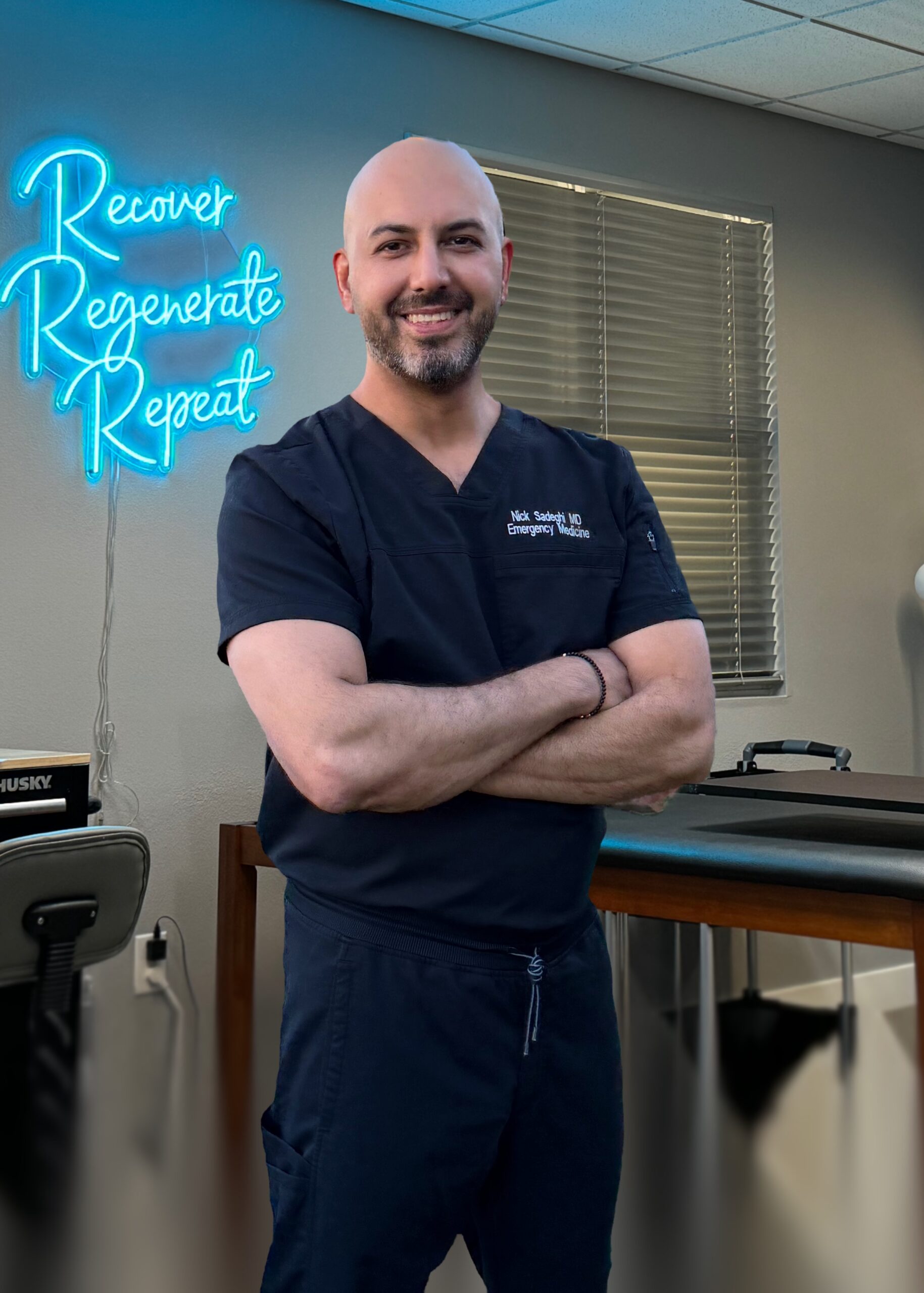
Meet Dr. Nick Sadeghi
“The mission of Synaptic is to help people stay strong, active, healthy, and engaged throughout every stage of life by combining longevity medicine, regenerative therapies, recovery science, and athlete-focused care into one integrated system.”
Whether the goal is optimizing athletic performance, improving recovery, restoring energy, or supporting healthy aging, Synaptic focuses on helping the body function at a higher level for longer. Using modern therapies such as Hormone Replacement Therapy, NAD optimization, Regenerative medicine, Chiropractic body work, PRP, Tenex, EBOO, and advanced recovery modalities, Synaptic is designed to support performance, resilience, recovery, and long-term vitality.
Dr. Nick Sadeghi
The Synaptic Way: Integrated Recovery
The Synaptic Way emphasizes restoring the Achilles tendon’s capacity to tolerate load. We combine imaging, movement assessment, gradual calf strengthening, and a carefully planned return to activity. Complementary shockwave, laser, PEMF, or other recovery technologies may be considered on an individualized basis, with attention to tissue healing and procedural timing.
Our approach brings sports medicine, regenerative and rehabilitation principles, and recovery technology together—selecting the right intervention for the right stage of healing.